Emerging Technology : 3D Printing Blog
- Get link
- X
- Other Apps
3D printing : Exploring 3D Printing as an Emerging Tech
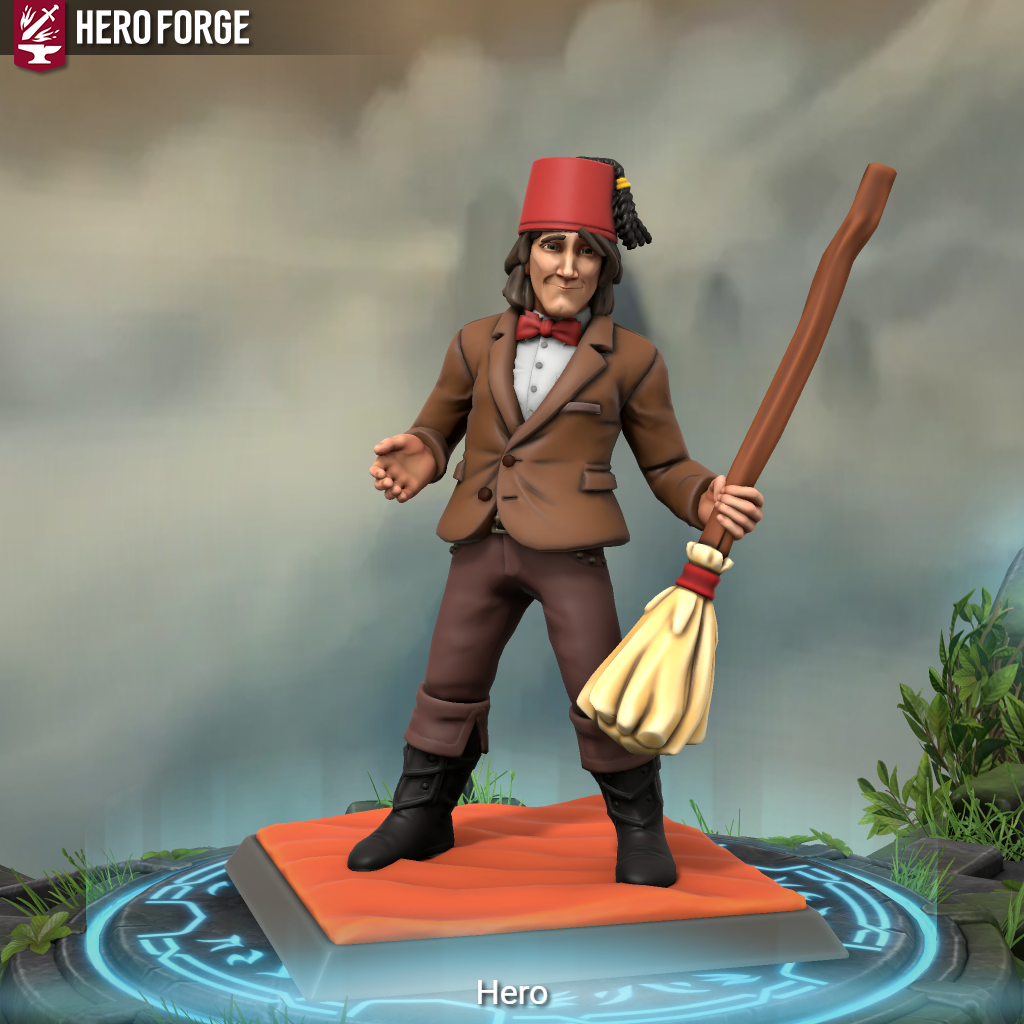
Hero Forge is an online character customization service that allows you to kitbash your own character for 3D printing using a wide array of premade assets. This service is particularly popular among enthusiasts of tabletop games like Dungeons and Dragons, as it enables users to create highly personalized miniatures that can be brought to life in their campaigns.
Intrigued by the possibilities, I decided to explore Hero Forge by creating a figure of the 11th Doctor from the sci-fi television series "Doctor Who." The platform provided a plethora of customization options, including various facial features, hairstyles, clothing, and accessories, which allowed me to closely replicate the iconic look of the 11th Doctor. I was able to choose his distinctive tweed jacket, bow tie, and even his signature Sonic Screwdriver. The detailed design process was intuitive and user-friendly, making it easy to adjust and refine each aspect of the character to my liking.
Once I was satisfied with the digital model, I had the option to either download the STL file for 3D printing at home or have Hero Forge professionally print and deliver the miniature. This experience not only demonstrated the versatility and creativity that Hero Forge offers but also highlighted its potential for bringing beloved characters from various media into the realm of tabletop gaming.
How is 3D Printing Relevant for Traditional and Digital Video Games?
Introduction: What is 3D printing?
3D printing, also known as additive manufacturing, has revolutionized numerous industries, including gaming. This technology enables the creation of three-dimensional objects from a digital file by layering materials. The relevance of 3D printing spans both traditional board games and digital video games, offering myriad opportunities for innovation, customization, and enhancement of the gaming experience. This essay explores the impact of 3D printing on these two realms of gaming and explains the rationale behind 3D printing a grandma game piece for a board game.
Usage of 3D Printing in Traditional Board Games:
Customization and Personalization:
One of the most significant advantages of 3D printing in traditional board games is the ability to customize and personalize game pieces. Players can create unique avatars, tokens, and components that reflect their personal preferences and creativity. This level of customization enhances the player's connection to the game, making it more engaging and enjoyable.
For example, enthusiasts can design and print custom meeples (small figures used in games like Carcassonne) that represent themselves or their favorite characters. This personalization can also extend to entire game sets, where players can tailor the aesthetic and thematic elements to suit their tastes.
Prototyping and Game Development:
3D printing is an invaluable tool for game designers and developers. During the prototyping phase, designers can quickly produce physical models of game components, test them, and make necessary adjustments. This rapid prototyping accelerates the development process, allowing for more iterations and refinements before the final product is released.
Additionally, 3D printing reduces the costs and time associated with traditional manufacturing methods, making it more accessible for independent developers and small companies to bring their ideas to life. This democratization of game development leads to a more diverse and innovative gaming landscape.
Replacement and Enhancement of Components
Board games often suffer from wear and tear, especially if they are frequently played. 3D printing offers a solution by allowing players to print replacement parts for damaged or lost components. This capability ensures the longevity of the game and maintains its playability.
Moreover, players can enhance their existing games by printing add-ons or expansions. For instance, they might create additional buildings, characters, or terrain pieces that add complexity and depth to the gameplay. These enhancements can keep older games fresh and exciting, extending their lifespan and replayability.
Educational and Therapeutic Applications
3D printing can be used to create educational board games that teach concepts ranging from mathematics to history. Custom game pieces can be designed to represent historical figures, scientific models, or geographical features, making learning interactive and fun.
In therapeutic settings, board games with 3D-printed pieces can be tailored to meet the needs of individuals with disabilities. Custom-designed pieces can be easier to handle or visually distinct, facilitating participation and enjoyment for all players.
Usage of 3D Printing in Digital Video Games:
Merchandising and Collectibles
3D printing bridges the gap between digital and physical realms by allowing fans to create tangible merchandise and collectibles based on their favorite video games. Companies can offer digital files of in-game characters, weapons, or items that players can print at home or through a printing service. This trend capitalizes on the demand for unique, game-related memorabilia and enhances the player's connection to the game.
For example, a player might print a model of a beloved character from a game like "The Legend of Zelda" or "Overwatch" to display on their desk. This personalization adds a tangible element to their gaming experience and fosters a deeper sense of immersion.
Modding and User-Generated Content
The gaming community is known for its creativity, often modifying games or creating user-generated content (UGC) to enhance their experience. 3D printing expands the possibilities for modding by enabling the creation of custom physical peripherals and accessories.
For instance, gamers can design and print custom controllers, joystick grips, or VR accessories tailored to their specific needs and preferences. This customization can improve comfort and performance, enhancing the overall gaming experience. Additionally, players can share their designs with the community, fostering a collaborative environment where innovative ideas can thrive.
Immersive Gameplay and Augmented Reality
3D printing can enhance immersive gameplay by integrating physical objects into digital environments. Augmented Reality (AR) games, which overlay digital content onto the real world, can benefit from 3D-printed objects that players interact with during gameplay.
For example, a game might involve scanning a 3D-printed object to unlock special features or quests within the digital world. This fusion of physical and digital elements creates a more engaging and interactive experience, blurring the lines between reality and the game.
Game Development and Prototyping
Just as in traditional board games, 3D printing is a powerful tool for digital game developers. It enables the creation of physical prototypes for in-game assets, allowing designers to test and refine their models before finalizing them digitally. This iterative process ensures higher-quality assets and a more polished final product.
Additionally, 3D printing can be used to create physical models of characters or environments for promotional purposes. These models can be showcased at events, used in marketing campaigns, or even sold as limited-edition collectibles.
Introduction : Printing a Grandma playing piece
The decision to 3D print a grandma game piece for a board game stems from several motivations, reflecting the broader relevance of 3D printing in gaming. However, it began with a polish board game about communism in eastern europe called Kolejka. 2 years ago I spent 1 month in Romania and my friends there showed me of this game with these small little wooden figurines that represented people but the game was in Romanian so I found it very hard to get involved but the design of the actual game caught my eye and I thought it could of been taken further and it could be translated to english.
So, for this study I will be showcasing 3 variations of the same figurine printed with 3 different filaments Resin, PLA & wood to portray that even with budget restraints and one of the cheapest printers on the market which is an Easythreed printer purchased for £50 you can still get a figurine that works for bringing digital to traditional games. Furthermore, that if there is enough of a time can be polished up and then cast a mould of and can be injection moulded.
Grandma: Achieving Personalization and Emotional Connection
Creating a custom game piece, such as a grandma figure, adds a personal and emotional touch to the game. This piece might represent a beloved family member, adding sentimental value and enhancing the gaming experience. Players often find games more enjoyable when they can relate to the characters and elements within them and having a character that resembles people who lived through communism and is a big part of eastern european families history my hope is this redesign can help them connect better with their roots.
Furthermore, for personalisation most figurines that have been printed get hand painted either via an airbrush, spray paint or paint brushes so my idea was to stay true to the source material the character will be the same for every player however her big winter coat will change colour for example (Player red obtains the red coat grandma) I was also thinking of maybe different ethnicities to even being incorporated.
Enhancing Storytelling and Gameplay
A grandma game piece can introduce unique storytelling opportunities and gameplay mechanics. For example, she might possess special abilities or play a pivotal role in the game's narrative. This addition can make the game more engaging and memorable, offering players a fresh and unique experience.
Cultural and Generational Representation
Including a grandma character in a board game promotes diversity and representation. It acknowledges the importance of different generations and cultural backgrounds, fostering inclusivity within the gaming community. Players of all ages can appreciate and connect with a character that reflects their own family dynamics and experiences.

First Attempt : Wood Grandma Figurine
My first attempt at producing grandma with the 1.75m Wood filament arose a few issues specifically with the layers. The entire infrastructure was weak with each layer having the ability to be completely individually separated due to not fully being fused together leaving an appearance that resembles the aftermath of termites chewing through wood. Furthermore, the figurines head fell off on its own accord and afterwards even after a small amount of pressure within my hand crushed to pieces.
What was the issue?
After some investigation, I discovered that PLA and wood filament have different melting points at which they melt and cool correctly. PLA melts at 205°C - 225°C, whereas wood filament melts at 210°C - 230°C. While this is not a massive difference, it is slightly higher for wood filament. To address this, I returned to the splicing software, adjusted the nozzle temperature to a higher setting, generated a new GCODE file, and initiated a new print.
As a result, the gaps were eliminated after following this procedure. Although the layers were thicker compared to the initial weak version, the print was significantly smoother and, from a stability point of view, much stronger with no signs of weakness.
Additionally, I believe that if I had printed at perhaps 210°C - 215°C, the lines might have come out thinner while still being well-fused. If I had spent more time on this project, I would have tested this theory.

Conclusion: What did I find from my experiment?
Starting from the left to right, you can see the figurine printed in resin, followed by one in PLA, and ending with one in wood filament. The results demonstrated that despite both PLA and wood filament having a 1.75 mm thickness, the wood filament weighed significantly less than the PLA. However, the layers in the wood print came out much thicker. Furthermore, while the wood figurine lost some detail, it was undoubtedly the cheapest to produce out of the three.
This is relevant because, while 3D printing is a powerful emerging technology that will shape our future, it is not always the machine that dictates a good result. The point being made is that when it comes to production, we must not forget the process of making the filament that goes inside. We need to ensure it is being ethically produced in a way that is not harmful to our lives or the environment. This study showed me that despite wood being cheaper, lighter, and a great alternative to the original wooden playing pieces in Kolejka, PLA plastic is arguably a better option. This is because PLA can be recycled and reproduced back into new filament, and it provides a more accurate, detailed print. For traditional physical board games, this reliability and quality are crucial for achieving financial success.
The resin figurine, printed with an Elegoo Mars, took roughly two hours to print. However, this was also with a classmate's print on the bed, which added to the production time. Unfortunately, I made the mistake of not adding any Z lift during the resin printing process. As a result, the base of the support ended up connecting to the base of the figurine, which ruined the bottom of the figure's quality. I recognise this as a fault and will keep it in mind for future productions to ensure better quality prints.
In conclusion, while wood filament offers some benefits in terms of cost and weight, PLA plastic remains a superior choice for detailed, reliable prints. From an ethical standpoint, PLA is generally considered more environmentally friendly as it is derived from renewable resources like corn starch and can be recycled. Wood filament, though derived from natural materials, often contains a mix of PLA and wood fibres, which still makes it partly reliant on plastics. Resin, on the other hand, typically involves more complex chemicals and is less easily recyclable, making it the least environmentally friendly option. Ensuring the ethical production of filaments is essential for the sustainability of 3D printing technology.
Conclusion: What have I learnt from this study?
3D printing has significantly impacted both traditional and digital video games, offering customization, rapid prototyping, and enhanced gameplay experiences. The technology has democratized game development, allowing for greater creativity and innovation. Through my experience of 3D printing a grandma game piece using different filaments like PLA, wood, and resin, I discovered the nuances in material properties and the importance of precise temperature settings for optimal results. By adjusting the nozzle temperature and refining the printing process, I achieved a smoother and stronger print, highlighting the potential for detailed and durable game pieces.
Personalizing game pieces through 3D printing not only enriches our gaming experiences but also promotes emotional connections, inclusivity, and educational benefits. The ability to create unique, high-quality figures like the 11th Doctor from "Doctor Who" for tabletop games such as Dungeons and Dragons demonstrates the versatility and creative potential of this technology. As 3D printing continues to evolve, its relevance in the gaming industry will only grow, opening up new possibilities for players and developers alike, and fostering a deeper engagement with the games we love.
- Get link
- X
- Other Apps


Comments
Post a Comment